



Debunking the Biggest Myth About Playing with an “Open Throat”
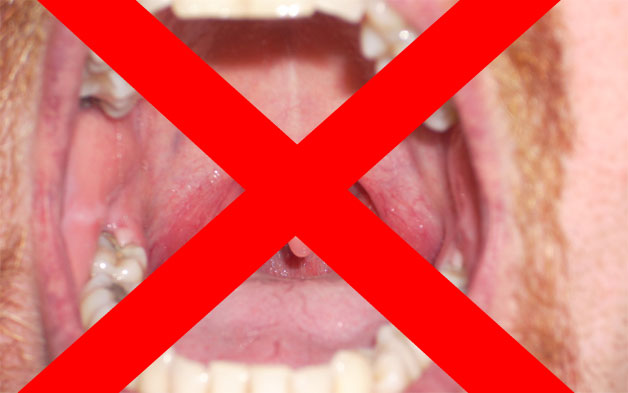 OK, I admit it, I’m not perfect. Yes, I know that it comes as a major shock to those of you who have come to know me through this utterly flawless website, but lo and behold…I kinda messed up.
A Rude Awakening
A few months back, I put out an article titled 8 Tips for an Open Throat and Bigger Sound. A short while later, while corresponding with killer New York saxman Adam Kolker regarding his interview article, Adam was honest enough to let me know that he completely disagreed with what it was that I was suggesting one do to achieve that open throat and resulting bigger sound.


Adam shared that he was a student of the legendary saxophone teacher, Joe Allard, and Joe’s approach was quite different. So I did a bit of digging to see what Mr. Allard had to say on the subject of the throat. First and foremost, Joe never really believed in the whole concept of the open throat in the first place, since the throat cannot move, nor can it close. Instead, the only thing we can do to affect the flow of air coming through the throat is to properly position the tongue.
Don’t Believe Everything you Hear
Now, one of the most common thing that students are told to do while playing is to blow through the instrument using imagining that they’re singing the “AH” sound. That’s what I heard time and time again when I was coming up, so of course that tip found its way into my article. But thanks to my reading up a bit on Joe Allard’s teachings, I’ve come to find out, that the “AH” sound is actually a detriment to getting the maximum amount of air through the throat. Instead, we should be moving our tongue into an “EE” position, and it actually makes sense to me when I put it into practice.
Gagging your Way to Greatness
To illustrate, go ahead and make a gagging sound (make sure to do it nice and loud, preferably somewhere where lots of people can hear you). Now, gradually move your tongue up and out of the gagging position, and you’ll notice that an “AH” sound begins to emerge.
Next, try to gag while pronouncing the vowel sound, “EE.” I suppose it’s possible, but it’s a lot harder than making those lovely gagging sounds while your tongue is in the “AH” position. It’s almost like there’s a throat tension spectrum that starts at gagging, and goes all the way to the top of the spectrum with powerfully free-flowing air. And the “AH” sound is far closer to the gagging end of the spectrum than the “EE” sound.
When you make the “AH” sound, your tongue sits down low in your mouth, which might seem like a more relaxed position, but you’re actually cutting off the flow of air when you do this. Using the “EE” sound moves your tongue higher in the mouth to where it’s touching the upper molars thereby making your sound bigger and more focused.
So from now on, if you wanna get that noticeably bigger and more focused sound you’ve been going for, simply open up and say… “EEEEE!”
To see where I lifted most of this info from, jump on over to Jack Snavely’s Interview on JoeAllard.org [link no longer active].
Photo by Ateo Fiel [Sorry(!), but this web page has disappeared since the original publication of this article]



September 12, 2011 @ 7:28 am
Interesting interview with Jack Snavely. Great find. He’s another iconic woodwind teacher, whose influence is still felt (in the Milwaukee area at least, 30 some years after he’s retired to Florida). There are still some nasty words about him scratched in the music locker room door. Most likely he was a hard teacher.
I know my teacher was a Snavely student for years. Tongue in EE is one of the first thing he teaches, though later in lessons he does say open the throat. Hmm.
September 12, 2011 @ 8:17 pm
Yeah, seems like a very knowledgable player, your lucky to have soaked up some Joe Allard wisdom, even indirectly. Thanks Dave!
September 12, 2011 @ 9:22 am
Years of lies and deceit! Pains me to know that more people don’t know about this. Why don’t they?
September 12, 2011 @ 8:19 pm
Deceit indeed! But seriously, I think it’s just that people associate the “AH” sound with a big voice, like Pavarotti blaring out a dramatic final note. Anyhow, it’s great to get some other perspectives.
March 13, 2019 @ 6:29 pm
“O e o, the old one” Wizard of Oz – song / chant of palace guards for the wicked witch. Feel the tongue move as you
September 12, 2011 @ 10:07 am
I think the underlying concept here is what is referred to as “voicing.” There isn’t just “AH” and “EE,” but a whole continuous range of voicings. We’ve all got our own set of voicing problems to solve–some of us will solve them by opening up (“AH”), some will solve them by focusing in (“EE”), and most of us will need to apply each of those concepts at some point.
It’s a particularly difficult issue on the saxophone. Clarinetists get their best results way at the “EE” end of the spectrum, while flutists, double reed players, and brass players tend to have success at the opposite end: “AH” or even “OH.” The saxophone requires hitting a sweet spot somewhere in the middle, so precision is a must. Mouthpiece pitch exercises are great for developing this.
September 12, 2011 @ 8:20 pm
Wow, you’re taking this entire topic to a whole ‘nuther level, I really never thought about it that way. That’s why it’s always cool to get the doubler’s perspective. Thanks so much for this Bret!
September 12, 2011 @ 9:48 pm
I discovered those Joe Allard videos (I think they were called, “The Master Speaks”) when they first came out in about 1989 or so. I was immensely helped by the idea of voicing the sound with the “eee” syllable. What that does in the simplest physical sense, is it changes the velocity of the air stream (speeding it up), which not only makes the sound more focused and powerful, but also, more easy and efficient to produce.
Having said that, it’s important to realize that your tongue should, and will, move from this position as you play. Joe Allard referred to this as the “internal embouchure”. I think it’s a good idea to aim for the “eee” shape, but not try to hold it there rigidly. If you do Joe’s “playing the mouthpiece” scale exercise, you’ll find your tongue moving all over the place (but not your jaw!) That’s the whole point.
Another thing to keep in mind with the position of the tongue is the soft palate (the soft tissue right behind the hard palate). In voicing anything, whether vocal or into a wind instrument, it is the internal shape of the mouth that largely conditions sound quality and projection, even intonation. That shape is determined by whatever the tongue and soft palate are doing together in any given moment.
One word of caution about this all however. If a saxophonist doesn’t have good independence between what the tongue does and the jaw does there can be some serious problems if he or she tries to play with the “eee”shape. A simple way to test this is to whisper “la la la” a few times as you look into a mirror. If your jaw moves with your tongue, you’ve lost that independence (it’s easily regained through brief practice). If this independence isn’t in place, there’ll be lots of reed pinching.
Sorry for going on so long about this, and thanks again, Doron for a wonderful article. That bit of advice is going to help a lot of saxophonists, I think. (And what wonderful, insightful input you’ve already had from your readers about it! I especially appreciate Bret Pimentel’s highly useful advice.)
September 12, 2011 @ 9:59 pm
As usual, I’ve learned so much for your insights. It looks like the comments here are truly taking this article to the next level. I’m excited to take what you’ve laid out here into the practice room to take my own playing to the next level.
Thanks Bill!
July 19, 2022 @ 6:05 pm
Hi mate,
I play with the EE voicing for rock and blues. I always have a sore throat after a gig.
Any tips?
September 13, 2011 @ 1:59 pm
Wow, you’re taking this entire topic to a whole ‘nuther level, I really never thought about it that way. Interesting interview
September 13, 2011 @ 2:01 pm
Glad you’re enjoying it!
September 13, 2011 @ 7:59 pm
Although I would agree with Mr. Allard’s discouragement of the “AH” position, I am not a proponent of the “EE” position either.
I studied saxophone with Al Regni, who is an on-call saxophonist with the NY Phil. He is a former Allard student, and he told me some of the oral cavity shapes he was taught by Allard made him gag. Think about an exaggerated “EE” sound (almost like a hiss). Personally, that makes ME gag! With that being said, Mr. Regni always told me that he would come out of his lessons with Joe sounding like a million bucks. He taught me using a “OO” syllable. I like this (and teach this) because if needed I can bring my pitch up a little bit to an “EE” position, but I can also bring it down too and not lose focus.
In my opinion, a lot of the throat position depends upon type of music being played, as well. This is a bit of a generalization, but classical saxophonists tend to play with a higher pitch center (colder, faster air) than jazz saxophonists. There are two theses that can be found online dealing with physical differences between different types of saxophonists, one by Vanessa Hasbrook and one by Joel Patrick Vanderheyden. I know Allard wasn’t a classical saxophone teacher per se, but maybe he felt that the “EE” oral cavity with a good starting base when he taught.
September 13, 2011 @ 9:37 pm
What you’re saying makes a lot of sense. I really like what Bret had to share about working with a variety of voicings. When it comes to music there’s very rarely a one-size-fits all solution, so I’m glad that the commenters here are giving a broader perspective on the whole “open throat” concept.
That said, I do agree that “EE” is a good place to start, as it’s really helped me quite a bit in the short amount of time that I’ve been playing that way.
Thanks Jacob!
September 16, 2011 @ 7:19 pm
Bret Pimental for pres.
September 16, 2011 @ 7:29 pm
Thanks for your support, but I have retired from politics to spend more time with my reed knife.
September 25, 2011 @ 1:11 pm
After all these years my thoughts are confirmed. Open your throat! Impossible-raise your tongue, lower you tongue, that’s all you can do. Thanks, Doron and Phil Sobel.
September 25, 2011 @ 5:41 pm
Yep. It’s also about assuming the same vocal position playing the note as you would if you were *singing* the note – so no bizarre contortions required.
Anyhow, thanks for stopping in, I’m glad you found the article interesting!
November 6, 2011 @ 11:04 am
Jim Romaine of Drake University has some interesting ideas on voicing. His approach is based on use of the position of the larynx (Adam’s apple) for voicing, especially in the altissimo range. It’s not the difference between “aaah” and “eeeh” it’s the difference between singing high notes and low notes. He has demos of the effect of larynx position on Youtube. I think the source of confusion about the tongue position is that the tendency is to move the tongue when the larynx is moved without the feedback that one gets when actually singing. It takes a little conscious practice to move the larynx without moving the tongue while playing.
November 6, 2011 @ 12:27 pm
I agree, it’s not quite as simple as pronouncing “EEE,” I simply think it’s a step in the right direction. You bring up some great points about not moving the tongue, as that’s one of the subtler aspects of tone production. Thanks for chiming in!
November 22, 2011 @ 12:17 pm
A-E-I-O-U…all have their place in tone production, I’d imagine.
November 22, 2011 @ 12:33 pm
Absolutely, and each vowel sound can create its own sound effect, but for the most open sound on the saxophone, I think that EEE is a good starting place. If you haven’t done so, I’d check out Bill Plake and Bret Pimentel’s comments as well as the others above for some more insights.
December 27, 2011 @ 2:06 pm
Liebman was also one of Allards pupils and in his book your personal saxophone sound shall be very influenced by allard.
I got one of the rare copies of allards VHS in my hands and I put them on youtube.
http://saxophonistisches.de/der-grose-blattschraubenreport/
I would say, he says a lot of interessting things, but other things are more a personal view and others are just outdated.
December 27, 2011 @ 2:08 pm
oh, wrong link:
http://saxophonistisches.de/joe-allard-the-master-speaks/
December 27, 2011 @ 10:25 pm
Yes, Liebman’s book is great! As for the videos, those are really cool as well, however, I’ve heard that they do not represent Allard at his best, since he was starting to go into his Alzheimer’s disease by the time those videos we made.
Thanks Tobias!
January 25, 2012 @ 2:50 am
Guy… thank you. I am a singer and one of the things that I have been studying actually is that we are supposed to work on developing an “open throat” to sing. If we don’t do it we will supposed to sound weak and thin, and strained too. I didn’t believe too much about that, simply because it didn’t make too much sense to me and trying to sing like that was no something natural to me. I’ve been studying things from various vocal coaches and hardly I found something that really convinced me. Then I found your this page and WOW, now yes, convinced me. There are lots of misunderstandings about lots of things, in singing too: “singing with a high larynx is bad and bla bla bla, you will sound forced if you do it and bla bla bla…” The position of the larynx while singing was one of the myths I luckily could discover the truth. Well… thanks for showing us that. I don’t play saxophone but you made me a better singer, thank you ^^.
January 25, 2012 @ 10:12 am
Wow, that’s very cool that you’ve found this article helpful! I would imagine that a powerful and focused airstream is a good thing to have whether you play sax or sing, so I can see the similarity.
I am curious how you came across this site, however(?).
At any rate, thanks so much for chiming in!
January 25, 2012 @ 8:37 pm
I was doing one of my Google researches and then I found your site. I started to read and then when you ‘said’ that the throat cannot move I felt like ‘BINGO’! THAT makes sense, and when you do exercises to get rid of tension in your tongue, neck, jaw or even in the muscles near the throat you feel like you have an ‘open throat’ – not because it was closed but yes because you were under bad tension (yes, there’s a good tension; a good tension that you put on your vocal folds to change the way your voice sounds. If well done it’ll not damage them.), what can hamper your singing and even when you play an instrument where a ‘free’ throat is need, like a saxophone. Thanks again.
January 25, 2012 @ 8:45 pm
A “free throat” – that’s a good way of thinking about it!
January 26, 2012 @ 7:22 am
A “free throat” – sure!
November 11, 2012 @ 6:35 pm
hey guys
jay weinstein here the guy who write The master Speaks…
this the first post i have ever written since i wrote the book in 1988 so take heed it may be the last
i find some of the posts pretty funny as a pro player for any years and hanging with guys like M Brecker. way back who loved the book
I was the who put in print the EEE tongue placement via joe’s instruction
forget al regnis ooo stuff in fact the ee works so well this is the only real way.. in fact one new tip is at hand to even put the farthest back, sides of the tongue resting on the upper teeth so that ( without the mouthpiece in your mouth), your tongue is almost out of your mouth! the back of he tonge is moved forward so that it sits up very high arched in your mouth
you are making the cavity smaller, where th mouthpiece fits into, in your mouth giving you even more pitch control and volume power
you can email me at jw.hf@livel.com if you have a quetion
November 11, 2012 @ 6:55 pm
Hello Jay,
Very cool to have you chime in here, and it’s very generous of you to offer you email for people with questions. I’m glad to see that we’re pretty much on the same page in terms of the “EEE” tongue position.
So when you say, “in fact one new tip is at hand to even put the farthest back, sides of the tongue resting on the upper teeth so that ( without the mouthpiece in your mouth), your tongue is almost out of your mouth! the back of he tonge is moved forward so that it sits up very high arched in your mouth”…
Do you mean to say that this is good advice, or is it one of the “funny” tips, as in funny = incorrect, or is this something that you actually recommend?
Doron
September 29, 2013 @ 12:14 am
Really useful and informative tropic.I am a sax fan. Love to play music. Thanks for sharing such a good post.Thanks again.
September 29, 2013 @ 12:15 am
Really useful and informative tropic.I am a sax fan. Love to play music. Thanks for sharing such a good post.Thanks again.
September 29, 2013 @ 12:16 am
Really useful and informative tropic.I am a sax fan. Love to play music. Thanks for sharing such a good post.Thanks again.
September 30, 2013 @ 7:24 pm
Thanks man, glad you found it helpful!
September 29, 2013 @ 12:19 am
Best site ever about sax player. Thanks.
May 20, 2014 @ 2:12 pm
I once was struggling, too, with this open-throat problem. Open throat does NOT mean lowered tongue. Open you throat but lift up your tongue as you normally do! Worked best for me. Cheers!
January 25, 2016 @ 2:45 pm
Whether the throat is “open”, or less “open” it is important to decide whether it is choked by unnecessary physical strain, sensations of an open throat have as much to do with the freedom of the surrounding musculature. Some players may benefit from being told to keep an open throat not necessarily because the windpipe itself is any larger but because that thought may help them focus on the wrong things that they are otherwise doing with the musculature of their neck. Shape does not dictate the state of the musculature but the reverse is true, in otherwords a skilled person can approximate the shape that an unskilled person is making without doing himself the same damage, there are different paths to the same shape.
January 25, 2016 @ 2:56 pm
And the “AH” sound is far closer to the gagging end of the spectrum than the “EE” sound.
Curiously the whispered “Ah” as practised by Alexander Technique Teachers has nothing to do with gagging. I am wary of labelling a sound this way or that way because of the bad habits and baggage that go with it. If you relate “Ah” to a person talking of a dentist depressing the tongue then they will remember and induce sensations of gagging, if you get an Alexander Technique teacher to show you the whispered “Ah” they will have a different experience.
Whether you play with an Ah or an Ee in your mind you can do it one way where you get in your own way and fight yourself and another where you get out of your own way and stop doing the unnecessary things that are getting in your own way. You cannot describe the state and co-ordination of a persons musculature by shape alone.
March 22, 2021 @ 12:08 pm
I’ll try to remember this next time I need to shout loud for attention. Instead of shouting ‘HELP’ I’ll shout ‘Heeeeelp’.
Yes thats sure to sound louder.
March 24, 2021 @ 9:33 am
HA! You never know, it could make the difference between life and death, leaving forever indebted to this article! :P
April 23, 2022 @ 6:11 pm
When I started playing tenor sax my tone was very bad. I had previously played flute for 10 years. I took some lessons from a classical sax teacher, Doug Pullen, and he helped me with my embouchure (I had to much lip in) and we did some overtone work. Around the same time I met Dave Liebman (he was touring with the Ellis Liebman band) Dave checked out my mouthpieces and suggested I use the Link instead of the rubber Berg. Then he showed me his overtone series exersizes. For the next three or four months I practiced getting all the overtones. This alone changed my life and gave me so much control of my tone. We didn’t talk about throat position that I can remember. My feeling is if you can get all the overtones and shift easily from one to another then your tongue and everything else are in the right position. I find it’s also useful to try overtone singing as this really works the inner shape of your mouth.
July 19, 2022 @ 7:19 pm
Hi mate,
I play with the EE voicing for rock and blues. I always have a sore throat after a gig.
Any tips?
July 20, 2022 @ 6:29 am
Hmm, I don’t know that I’ve personally had that same exact issue. I can say that I recently went down in reed strength from a 2.5 to a 2, and it’s been a surprisingly great discovery that I can gain more control over my sound and tire less easily while still being able to project and move throughout the entire range of the horn, so perhaps trying to go down in reed strength (which will force you to relax your embouchure a bit – which is a *good* thing, especially moving into the upper register where there is already a tendency to bite down) and see if that helps.